

What’s in a Name?
The Culture of Remembering in War and Life
Hope Fowler
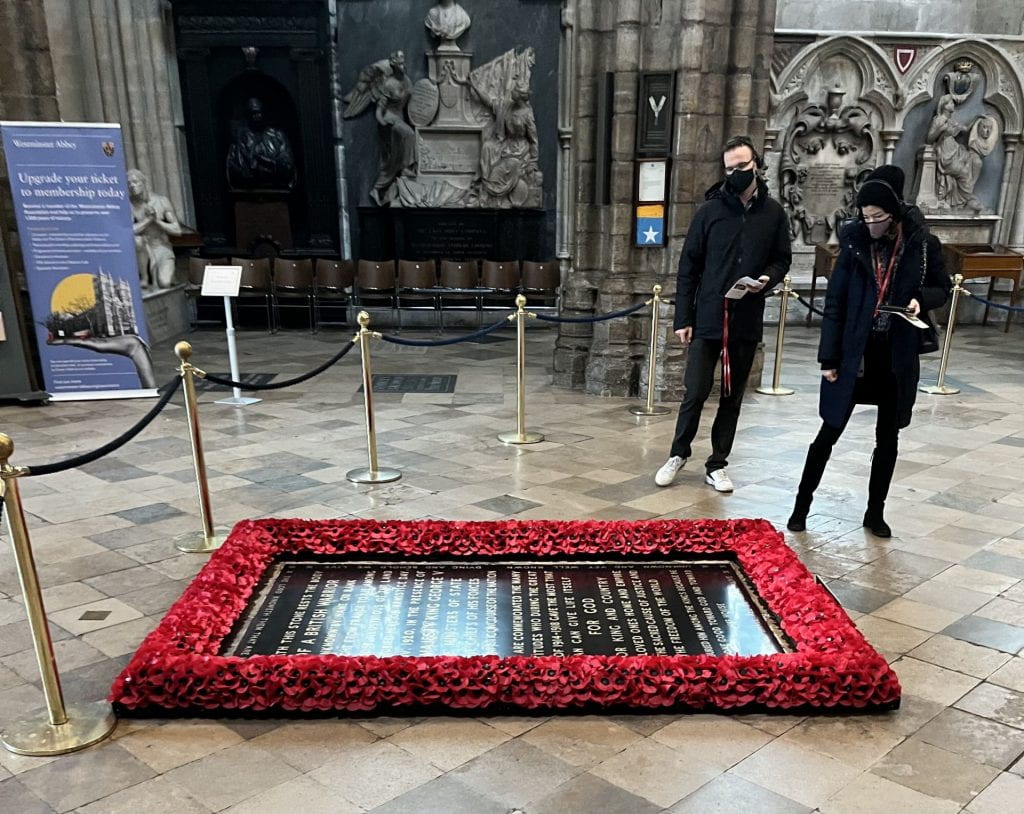
The Westminster Abbey, home to hundreds of graves and memorials, is a daunting building, with memories filling walls, ceilings and floors. It’s easy for all of these monuments to blur together, as you walk through halls and rooms of lost kings and queens memorialized in marble and stone, yet one grave is much larger than all of the others. Although not physically the biggest, the Tomb of the Unknown soldier holds the memories of the thousands who were lost in World War I and never delivered home to loved ones. The grave holds only one body, and yet as he lays there nameless, he provides hope for the families that never received the closure they longed for. By remaining nameless, he belongs to everyone who suffered through the tragedy, and he is honored as such, with poppies surrounding him at all times.
It is not uncommon to hear of war stories that involve the loss of personal identity. Arlington, Virginia is also home to a Tomb of the Unknown Soldier, memorializing all American soldiers who never returned home. Although the identity of these soldiers is unknown, the message here is not- war is filled with hardships, and those who risk their lives for their country are meant to be honored.
In my life, I had only ever heard of these two anonymous graves. I had visited Arlington and laid a wreath at the Tomb, and afterwards I had walked away and gone back to my regular life, eating and laughing with friends. And just a few days ago, when I visited Westminster Abbey, I did the same thing, walking away afterward on the hunt for some food to get before my next class. These anonymous tombs had entirely left my mind until I went to the Tate Modern Museum a few days later and came across a collection of photos depicting anonymous graves in Colombia. These graves, photographed by Juan Miguel Echavarria and Fernando Grisalez, are for bodies found on the coastline of the river, nameless bodies lost to the water throughout their 50 year civil war. These graves were decorated with crosses, or “nomen nescio”, meaning “no name”, or even with names of people of the community that had been lost and never found. Just the sheer amount of graves was incredibly overwhelming, each picture shifting between one grave to the next, all representative of those who lost their identity and their life in the Magdalena River.
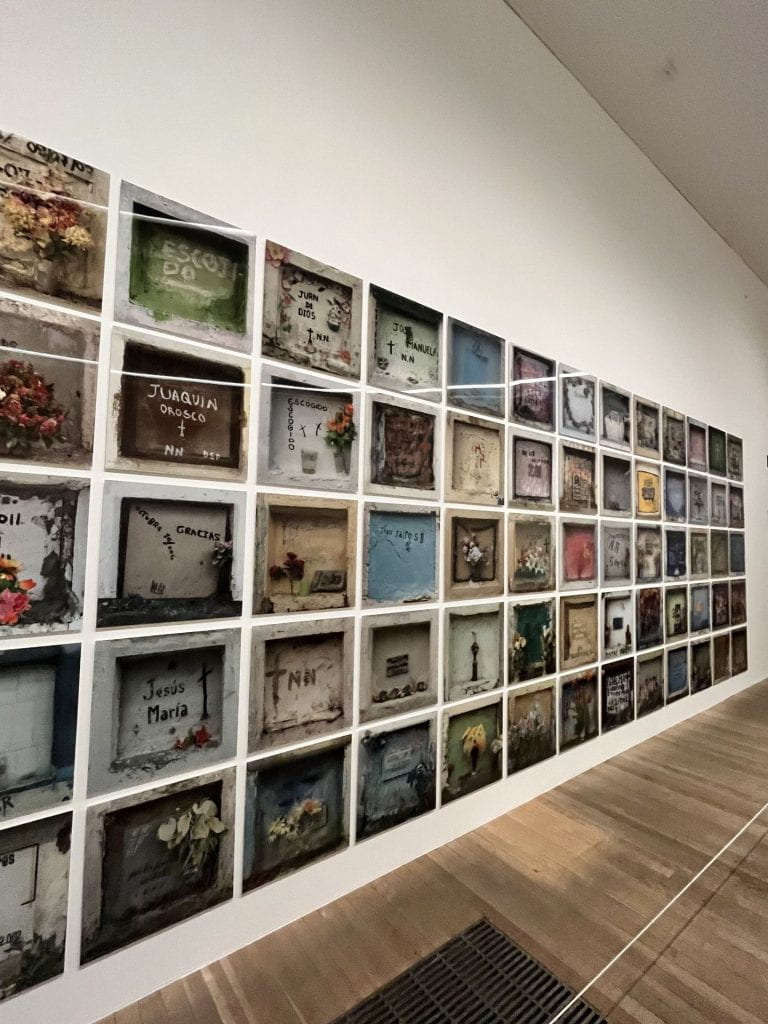
This exhibit was incredibly poignant, and after my encounter with the Tomb of the Unknown Soldier in the Westminster Abbey it truly made me think about memory, war and honor. The Tomb of the Unknown Soldier in the Westminster Abbey is visited by millions every year, paid respects and thanks by those who lived through the war and those who didn’t. School children are brought to visit, told to remember both the war and the soldier and pay their respects as this soldier was one of honor, bravery who gave the ultimate sacrifice for his country. And yet, those lost in the Colombian Civil War are remembered only by their small community, diligently taking these bodies and giving them a final resting place that no one would have seen if it wasn’t for Echavarria and Grisalez.
It is interesting how some wars, some soldiers, are seen as more important to remember than others. And yet, when it comes down to it, all of these graves are the same, filled with bodies no one will ever identify, lost to those who wished to mourn them and see them one last time. It is important for us to remember. Not just the one war or the one soldier, but remember the hurt that war brings, the emptiness of the hearts of those who mourn, the nameless being placed into the ground, and most importantly, the hope that all of these soldiers had for a better future, one that we are meant to create.