
Westminster Abbey: Memorials as Unique as Those they Honor
Colin Nashelsky
My first thought as I experienced walking through Westminster Abbey was “this has nothing to do with Downton Abbey.” My second thought was about all of the countless memorials that shared a home in that building and how they were all so unique in a way. The sheer number of them amazed me as it showed how many people throughout the years were believed worthy of being remembered throughout time (or in some cases how many people paid to be remembered throughout time). How certain cultures honor and remember history can be just as important as the history itself and offer an intriguing insight into who they valued and what acts would garner the most legacy moving forward. It also manages to differentiate the local or national icons from the global ones. As an American with only a small understanding of true British history, it fascinated me to see such grand memorials for admirals and politicians I had never heard of while someone as renowned as Charles Dickens got only one quite small in comparison.
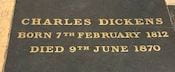
While I was able to learn quite a bit about some of these unknown historical figures from Great Britain’s history, Dickens’ memorial only had his date of birth and date of passing. If someone who did not know Charles Dickens or his works viewed his memorial, he would have no way of learning about him from his memorial. The differences in these memorials and how much they tell of the person fascinated me. So many people were honored in the grand building and yet the level of remembrance was not equal between them. Some had massive statues with their life stories written out beneath them while others got only their name and the days that marked their beginning and end. While some of this could be due to how much they paid to have a memorial of themselves built after death, it could also show how not every memorial was treated with the same amount of prestige and as a result, the amount of detail and substance to them differ.
This can be seen even in the difference between writers as while Charles Dickens received a small memorial compared to others, not all writers shared this fate. William Shakespeare, legendary playwright and one of, if not the, greatest influence to theater received a statue of him at the center of fellow writers showing that he was deemed the one greater than all of the others.
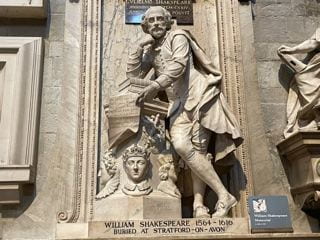
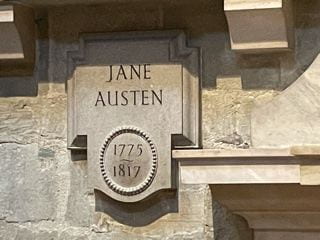
As I stared at this grand statue before me, the tour guide pointed out the other memorials around it including one of Jane Austen, featuring yet again just the year of birth and the year of death. I honestly would have missed it due to it being greatly overshadowed by Shakespeare’s memorial just near it, literally symbolizing the difference in how people thought they should be honored and remembered. While I am not writing to argue who is the greater or more impactful writer, it still intrigues me that while both were writers who were chosen to be commemorated, they were not honored in the same manner.
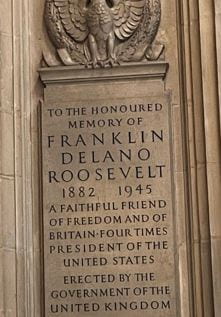
As I finally got to the end of my tour of Westminster Abbey, I was met by the memorial for President Franklin Delano Roosevelt. His memorial featured not only a brief mention of how he was an ally to freedom and Great Britain but also the fact that it was made by the United Kingdom, showing how even though he was not from the United Kingdom, his efforts to help them in the fight for freedom was enough for the government to believe he should be both honored and remembered for his actions. It was in seeing this that help me put what I was thinking during my time there into words other than “Oh cool!” and “Hey, I know that guy!” It made me realize that all of the people there were unique and while not everyone received the same amount of honor and remembrance after death, it helped make each of their memorials stand out from the countless around them. They lived incredibly unique lives and in death, their memorials were no different.